Post-Penny Compliance: Cash Rounding in Small-Dollar Lending

The era of the one-cent piece has reached its conclusion. Following a White House directive to the Department of the Treasury on February 9, 2025, the U.S. Mint ceased regular production of the penny, citing a production cost of 3.7 cents per unit. While the Mint completed its final regular run in November 2025, the anticipated “buffer” of 114 billion pennies in circulation has proven insufficient to prevent localized shortages.

Federal Reserve terminals are already experiencing deficits, forcing lenders and vendors who allow cash transactions to make immediate decisions on how to handle this in a “nickel-minimum” economy.

For the small-dollar and payday lending industry, this transition is more than a logistical curiosity. It impacts the entire loan cycle, from disbursement to the final payment on a credit product that sees high volatility in disclosure values when even slight adjustments are made. As we head into major industry periods like the annual tax refund season, leaders in the small-dollar space must evaluate and coordinate their approaches to address the calculative and regulatory risks emerging from this currency shift.

The New Gap: Interest, Fees, and Rounding 

The most significant impact of the penny’s retirement for lenders who accept cash lies in the exactitude of financial calculations. Currently, state laws regarding interest rate caps and fee structures are rigid: calculations must be precise to the penny, particularly in this highly regulated space. Guidance from the Treasury and the National Council of State Legislators (NCSL) is clear that interest and fee calculations must occur before any rounding takes place.

The removal of the penny creates a practical challenge for lenders who accept cash payments at branch locations. When a borrower’s final payoff amount is something like $302.03, the lender must decide how to handle the cents that cannot be tendered in cash. One option is to round the amount up and require the borrower to pay $302.05. However, this effectively increases the consumer’s cost and would generally only be acceptable to regulators or examiners if clearly disclosed and reflected in the finance charge and APR calculations. The more common approach is to round down and waive the remaining amount. While a two‑ or three‑cent waiver may seem insignificant on an individual loan, these small adjustments can compound across a portfolio of small‑dollar accounts. And this example considers only the final payment—if every periodic payment must be rounded, and the servicing system cannot properly support those adjustments; the operational and financial impact can become much more substantial.

States are unlikely to move to nickel increments for interest rate caps because doing so would jeopardize the stability of electronic commerce. In other words, dollar and cent payments are not changing due to the option for electronic payments. Digital payments—via ACH, debit cards, or mobile apps—account for the vast majority of volume and will remain precise to the cent. Consequently, small-dollar finance leaders must prepare for a dual-track system where electronic transactions remain penny-precise, while cash-heavy storefront environments navigate a “50-state gauntlet” of rounding inconsistencies or special requirements.

The Vital Role of Cash in Short-Term Credit 

While the broader financial world moves toward digitization, the small-dollar lending industry remains uniquely tethered to physical currency. Sky-high interest rates and tightening credit have made managing household liquidity more daunting than it’s been in years. This economic pressure has forced many consumers to rethink how they manage their day-to-day finances.

For the underbanked or unbanked populations that rely on payday and small-dollar loans, the reliance on cash is often a necessity rather than a preference. When a borrower visits a storefront to make a cash payment, the “penny story” ceases to be a headline and becomes a critical point of friction.

Beyond the teller window, the lack of a federal regulatory framework around rounding carries significant legal risks. Because states have largely refrained from issuing new regulations specifically for small-dollar lenders, companies are essentially making spot decisions on currency rounding at the point of payment. This impacts the servicing side of the loan lifecycle. If a borrower provides a cash payment, the inconsistency in rounding rules could lead to disputes over whether a loan has been “paid in full” or if a deficiency of a few cents remains. Mathematical precision in both origination and servicing is critical. In the highly regulated world of small-dollar lending, this is not merely a matter of spare change; it is a matter of contractual precision and compliance audit trails.

New Strategies for 2026 

The elimination of the penny highlights how industry leaders must move beyond the migration mindset and dive into the compliance conundrum created by this shift. For payday and small-dollar lenders, where thin margins and high regulatory scrutiny are the norms, the stakes are particularly high. By establishing clear rounding protocols now, lending companies can protect themselves from the legal and calculative risks of a shifting currency landscape.

While the penny may be a small denomination, the lack of clarity surrounding its departure could lead to outsized headaches for the unprepared. As we move through 2026, the lenders who succeed will be those who bridge the gap between digital precision and the reality of a nickel-minimum cash economy.


Regulatory Compliance Review: Getting Your House in Order for the New Year

As the lending industry looks toward the new year, it’s an important time to review compliance infrastructure and ensure readiness for the evolving regulatory landscape. Given the recent slowdown in federal rulemaking from the CFPB, the focus on state-level regulatory compliance has never been more critical. In reviewing recent changes, between January 2024 and September 2025—a twenty-month period—state legislatures and regulatory bodies enacted 119 changes that directly impact motor vehicle lending, add-on products, and dealership operations.

While this volume of change sits within what we consider an “average” operating environment, the sheer breadth of updates serves as a powerful reminder that continuous compliance vigilance isn’t optional—it’s foundational to sound business practice. The end of the year is the ideal moment to conduct a comprehensive internal audit, not just to fix known issues, but to proactively review internal best practices for challenges in the upcoming year.

A Balanced View of State-Level Shifts

A majority of the recent regulatory activity we track remains centered on vehicle-specific transactions, underscoring the enduring complexity of state-by-state auto finance laws. Of the total changes, 119 updates were concentrated in the motor vehicle space alone. This included significant activity in areas of dealer profit and consumer protection: there were 16 updates to add-on product regulations (like service contracts and GAP waivers) and 26 updates to dealer regulations, covering everything from warranty work wages to manufacturer relations.

For lenders and dealers, even stable revenue streams require continued scrutiny of associated disclosures and refund processes to ensure compliance across different jurisdictions, including disclosure requirements for GAP Waiver in states like Massachusetts and Illinois.

Beyond sales, administrative requirements saw important shifts, including 17 updates establishing or mandating the use of Electronic Lien Provisions. While these systems streamline processes, they often introduce new compliance fees that must be accurately implemented and disclosed.

Similarly, 12 updates to Dollar Bracket Adjustments for retail installment sales contracts (RISCs) and small loans ensure that lenders must keep pace with incremental rate and threshold changes, many of which are tied to the Consumer Price Index (CPI). Maintaining system agility to handle these small, frequent adjustments is key to maximizing permissible returns and avoiding compliance headaches, particularly in states with strict rate limits that change annually or on a regular cadence.

The Emerging Compliance Frontier: Data Privacy

While the bulk of regulatory activity has been steady and predictable, one area shows a clear and accelerating upward trend: Info Security and Data Privacy. Overall, the period saw 18 updates related to consumer data protections affecting consumer credit. What’s particularly noteworthy is the emerging focus on data privacy within the motor vehicle sales cycle. Although the number of direct MV Privacy Provisions is currently small—with only three updates identified—this is the segment showing a distinct “lift.”

This is the industry’s early warning signal of motor vehicle-specific data privacy laws—the compliance equivalent of a future disruption. These updates focus specifically on provisions for data removal following a sale, often requiring dealers to delete consumer data stored in the vehicle itself.

This trend is set to accelerate. For auto lenders, this means going beyond traditional information security—protecting customer data on internal servers—to understanding and enforcing the downstream obligations of data handling post-sale. As an example, a robust modern compliance plan must include specific protocols for managing and deleting data in connected vehicles, defining who is responsible for this task, and ensuring compliance across the dealership network.

A Year-End Compliance Checklist 

The 119 state-level changes over the past two years reinforce a singular priority for the new year: robust operational readiness. An average volume of change is still a massive volume of work when executed across 50 states.

Auto lenders and dealers should implement a targeted, year-end compliance checklist:

  1. Review System Agility: Verify that systems for calculating rates, fees, and payments are immediately updated to reflect the 12 observed bracket adjustments and the 11 documentary fee updates.
  1. Audit Add-On Disclosures and Refund Processes: Conduct a full audit of all add-on product sales (16 updates) to ensure current disclosures and refund procedures align with the latest state laws, particularly for GAP waivers.
  1. Prioritize Data Privacy Preparedness: This is the most critical step for future-proofing your compliance management system. Develop and test internal protocols for handling requests for data deletion, especially for data stored within the vehicle itself, and be prepared for increased regulation in this space.


By addressing the steady flow of traditional motor vehicle and lending changes while keeping a vigilant eye on the rapidly increasing importance of data privacy, the auto lending industry can enter the new year not just compliant, but strategically positioned for future stability, compliance responsiveness, and overall growth. Do not mistake regulatory uncertainty or a shifting federal focus for permission to relax internal processes and guidelines. In fact, the fragmented and active state landscape demands the opposite. Use this moment to invest in tightening your policies and procedures—reshaping today’s compliance efforts into tomorrow’s competitive advantage.

Why Credit Unions Must Master Lease Calculation Accuracy in a Payment-Driven Market

The automotive market of the mid-2020s is defined by elevated vehicle prices, making outright financing unaffordable for a growing segment of consumers. For member-centric credit unions, this landscape has driven a significant strategic shift: reliance on leasing to provide members with affordable monthly payments.

Leasing is a product focused almost entirely on the basis of the payment, addressing member affordability concerns directly and serving as an important tool for credit unions looking to grow their auto portfolios and retain market share. However, as credit unions venture further into this space—a segment where calculation complexity far exceeds traditional loans—the need for pinpoint accuracy in every lease payment has never been higher. The difference between portfolio growth and operational peril rests entirely on the integrity of the underlying math and compliance engine.

Why Leasing Matters to Your Membership

The data confirms that leasing is increasingly a necessary service for credit unions to offer. Industry reports have noted a significant upward trend, with credit union-supported leases jumping from approximately 50,000 in 2021 to 64,000 in 2022. Furthermore, a large majority of responding credit unions have indicated intentions to increase their leasing portfolio in the near term. This organic growth is driven by necessity: when a member needs a reliable vehicle but cannot afford the higher retail installment contract payment, leasing provides the necessary path to affordability.

For a credit union, leasing is a powerful tool for retaining members and increasing market share in a highly competitive lending environment. However, to capitalize on this trend, credit unions must recognize that leasing operates under an entirely different set of computational and regulatory rules compared to standard retail financing. For a segment of the industry that often lacks the internal bandwidth of larger commercial banks, errors in calculation or non-compliance due to outdated systems can quickly negate the strategic benefit and introduce significant financial and reputational liabilities.

More Than a Dollar Error 

In a traditional retail installment contract, the sale price and interest rate are the primary drivers of the payment obligation. In leasing, the payment is a complex function of Capitalized Cost, Residual Value, the rent charge (money factor), and the highly granular handling of fees and taxes. A dollar error in the calculated payment—a figure typically derived through solving for the rent charge and depreciation—is not a trivial mistake. It is an error multiplied across the life of the lease, affecting depreciation, the residual value, and, most critically, the calculation and remittance of taxes and fees.

For member-owned institutions, inaccuracies quickly lead to immediate operational burdens, such as costly refunds and corrections, which can cost more to manage than the amount refunded. More damagingly, calculation mistakes can severely risk reputation. The credit union’s value proposition is built on trust and a commitment to member financial well-being, and a miscalculated, non-compliant payment can quickly erode that foundation.

Credit unions must also manage the difference in final payment handling. Unlike retail financing, where the final payment may absorb odd cents, leasing often requires truncation—where the final payment is reduced to allow all lease payments in the stream to be equal—which must be precisely accounted for to minimize charge-offs.

Addressing the Calculation Minefield: The CU Liability 

The critical challenge in lease origination is not the simple money factor application, but the highly granular handling of ancillary costs and regulatory requirements. Credit unions accustomed to standard retail loan procedures must master three distinct areas of complexity that pose a significant liability: Cap Cost Reduction (CCR) application, integration of fees and insurance, and state-specific tax methodologies.

First, the application of CCR is deceptively complex. CCR is determined by the structured application of down payments, trade-in equity, and rebates toward the capitalized cost. The precise processing order (e.g., Rebate first, then Trade, then Cash Down) is vital because it is influenced by specific lending program policies and state-level tax laws. If the system is not configured to follow this explicit order, it can incorrectly identify the taxable basis, creating an immediate compliance issue.

Secondly, the integration of ancillary products and fees require sophisticated handling. Fees can be flat or percentage-based, but their basis (e.g., total payments, residual value, or cash price) and taxability must be correctly determined. Furthermore, credit insurance products require intricate computations to ensure compliance with state-specific premium caps and age requirements. A truly compliant calculation engine must be able to handle complex functions like fee truncation or applying set maximums, ensuring the rules are followed exactly.

The greatest source of non-compliance risk remains state-specific taxation. Lease taxation can vary wildly across jurisdictions, involving Use Tax (calculated on the base payment), Tax on Sale Price, Tax on Total of Payments, or Rent/Depreciation Tax. Credit unions must ensure their systems can accurately track whether the tax is paid upfront or capitalized over the term—a level of detail that necessitates a computation engine specifically configured for every jurisdiction’s unique parameters. Trying to manually maintain or internally code for this dynamic regulatory flux is both impractical and a major financial liability for most credit unions.

Recognizing Compliant Growth: Leveraging External Expertise 

The opportunity to expand the auto portfolio through leasing is strategically clear, but the operational realities are often overwhelming. Most credit unions, particularly those that are not large corporate entities, lack the internal bandwidth and horsepower to successfully manage all facets of a leasing operation, including taking on the residual risk and managing the title ownership of the vehicles. Trying to build or maintain the expertise necessary to manage the specialized, constantly changing computational and regulatory landscape in-house is not only cost-prohibitive but carries immense risk.

The path to compliant and sustainable growth for the credit union industry is through strategic partnerships. By leveraging outside platforms that specialize in granular, state-of-the-art lease calculation precision, credit unions can effectively outsource the burden of computational compliance, regulatory monitoring, and tax administration.

This strategy allows the credit union to focus on its core mission—serving its members with affordable, reliable financing options—while ensuring the integrity of the lease payment, which remains the ultimate and most critical benchmark of a profitable and compliant transaction. Investing in a robust calculation infrastructure is no longer optional; it is the foundation upon which the future of the credit union auto portfolio must be built.

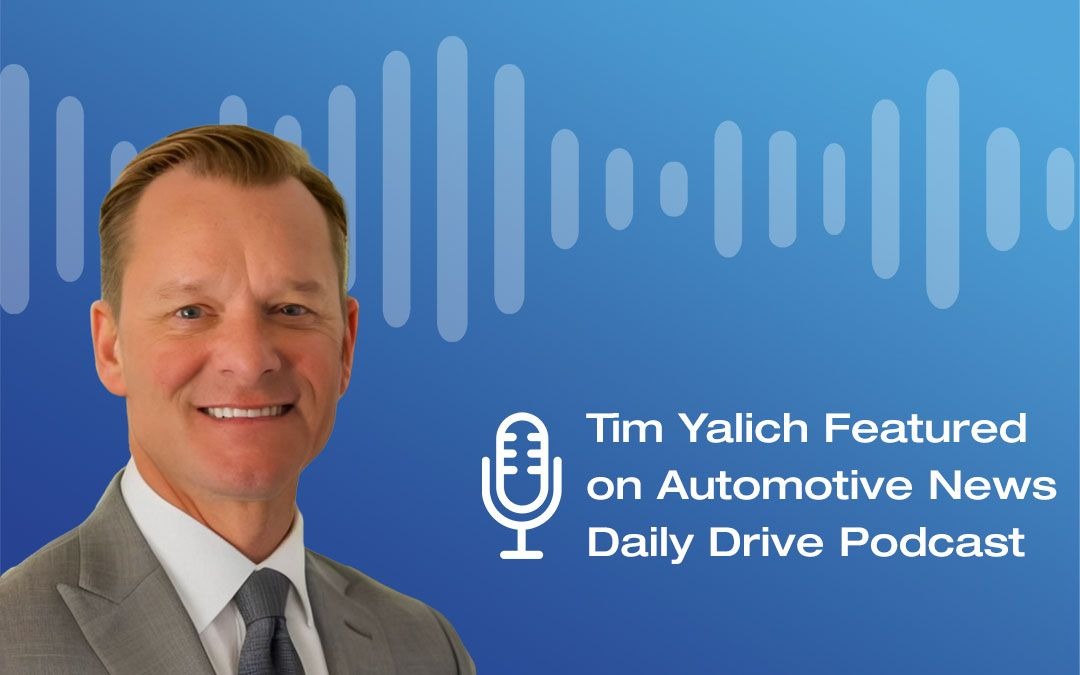
Tim Yalich Featured on Automotive News Daily Drive Podcast

Automotive News, a definitive source of information for leaders in the auto industry, features Carleton’s Vice President of Business Development, Tim Yalich, as a special guest on their podcast, Automotive News Daily Drive. In this episode, they sit down with Tim to discuss the growing challenges dealerships face in quoting accurate lease payments.

Throughout this episode, Tim highlights:

  • The three critical areas a dealership should prioritize when evaluating its lease calculation technology
  • How a dealership can effectively train its sales and F&I teams in understanding the nuances of lease payment structures to avoid common errors
  • The most common dealership misconceptions about lease payment calculations and how to correct them

Listen to the full episode now!

Apple Podcasts: https://apple.co/4oMqCE3

Spotify: https://bit.ly/4pes1Tr

Automotive News Website: https://bit.ly/4nZl084

Hidden Cost of Errors: Why Banks & Fintechs Need a Stronger Compliance Engine

Loan calculation may seem straightforward in terms of a rate, a term, a principal amount and the monthly payment being derived. However, recent industry survey data makes clear that this surface-level simplicity masks a far more complex reality.

For banks and fintech lenders, calculation accuracy isn’t just a back-office detail. It is the foundation of compliance, profitability, and customer trust. Yet two-thirds of banking and fintech institutions admit they encounter recurring loan calculation errors, and 60% say they struggle to keep pace with regulatory changes. These are not small, isolated missteps—they represent systemic risks that ripple through the entire lending process.

The numbers tell a troubling story: miscalculated fees, incorrect APRs, and human entry mistakes are creating rework, triggering audits, and even leading to legal exposure. If the “engine” powering digital lending platforms and banking operations isn’t built for precision and compliance, it isn’t just inefficient—it’s dangerous.

Beyond the Basics: Why Errors Multiply

Survey results show that over two-thirds of lenders experience loan payment discrepancies weekly or monthly. That means hundreds, if not thousands, of inaccurate payments and disclosures entering the system every year. The common culprits—fees, add-ons, APR calculations—might look like small slips, but they can turn into serious compliance violations.

Consider an online platform or bank branch that issues a loan with the wrong APR calculation. Not only does the customer see a misrepresented cost of credit, but the loan contract itself could be rendered non-compliant under Truth in Lending Act (TILA) rules. The cost of that single error may include fines, penalties, or worse: reputational damage that undermines consumer trust.

In digital and traditional banking, where speed, accuracy, and transparency is paramount, these errors represent an industry-wide liability.

The Strain of Ever-Changing Regulations

Regulatory change management emerges as another flashpoint, in which sixty percent of lenders say they struggle to align internal systems with new rules, and nearly a quarter admit it can take them three months or longer to fully implement updates.

This delay is not just inconvenient—it’s risky. Regulations evolve constantly, from federal statutes like TILA and banking/compliance protection regulatory guidance to state-level usury caps and disclosure mandates. A three-month lag can expose lenders to non-compliance for an entire quarter’s worth of originations. For banks and fintechs, that’s thousands of contracts potentially out of compliance with the law.

Additionally, the top compliance challenges include interpreting complex regulations (21%), updating and testing loan logic (19%), and coordinating changes across multiple systems (18%). As mentioned, with nearly 60% of lenders admitting they struggle to keep systems aligned with regulatory changes, these numbers reinforce a clear reality: too many organizations are still relying on fragmented tools and manual processes to manage obligations that demand precision and speed.

Complexity in Modern Loan Structures 

As if compliance weren’t enough, the very structure of today’s bank-originated and fintech loans is making accuracy harder to achieve. Tiered rates, complex payment schedules, and add-on interest rate conversions introduce new layers of complexity that legacy systems simply weren’t designed to handle.

Thirty-one percent of lenders said these structures significantly disrupt their processes, while 17% called them a constant source of problems. Only 14% felt confident that their current tools could manage them seamlessly.

For consumers, this translates into delays in funding approvals and confusing, inconsistent disclosures. For banks and fintechs, it creates yet another point of compliance exposure, and with 14% admitting they lack confidence in their current compliance tools, this limitation can directly hinder growth by constraining how aggressively they originate and scale loans. In short, the loan structures designed to offer flexibility are also amplifying operational risk.

From Manual Burden to Automation Imperative

The recent survey data also highlights the operational burden of keeping up. More than a quarter of lenders said their organizations require cross-functional teams just to manage compliance updates. Day-to-day efficiency suffers as staff time is pulled away from serving customers and redirected toward firefighting compliance problems.

The frustrations voiced by respondents were telling. The most common concern was the risk of making a costly compliance error, followed closely by the time required to finalize deals and the ongoing burden of ever-changing regulations. Manual data entry and paperwork—still shockingly prevalent in many organizations—added yet another layer of inefficiency.

In an industry where consumer expectations are shaped by one-click digital transactions, these slow, error-prone processes create a competitive disadvantage.

What Banks and Fintechs Want: A Compliance Engine, Not a Calculator

When asked what would most improve their operations, lenders pointed to several recurring themes. They want calculation tools that are more accurate and reliable, reporting capabilities that enhance audit readiness, and stronger integration between platforms such as customer relationship management (CRM) systems, core banking or fintech platforms, and loan origination systems (LOS). Just as important, they want real-time monitoring that flags potential compliance violations before they result in exposure.

Taken together, these needs point to a single conclusion: banks and fintechs don’t just need “calculators.” They need compliance engines—tools capable of integrating across platforms, adapting automatically to regulatory changes, and ensuring every disclosure, fee, and corresponding APR value is accurate from the start.

Free or legacy calculators may seem appealing on the surface, but as regulators scrutinize disclosures and fee calculations with increasing intensity, the limitations of these tools become glaring liabilities. A simple spreadsheet may not distinguish between interest accrual methods, recognize state-specific fee treatments, or adapt to daily interest calendars. Each gap represents a hidden compliance risk waiting to surface.

In a competitive market, banks and fintechs can’t afford to gamble on outdated tools. The risks—from customer dissatisfaction to regulatory fines—are simply too great.

The True Competitive Advantage 

Banks and fintechs must rethink how they view compliance. It is not a back-office function or a “necessary evil.” It is the foundation of consumer trust and, ultimately, a competitive advantage.

A bank or fintech lender that can deliver accurate disclosures, seamless calculations, and timely compliance adjustments will stand apart in a crowded market. Conversely, one that lags behind risks losing twice: once to regulators, and again to customers who choose a faster, more transparent competitor.

The latest survey data shines a spotlight on an industry at a critical juncture. Calculation errors, compliance delays, and operational inefficiencies are holding lenders back. But the path forward is clear. By investing in robust compliance engines that integrate seamlessly across platforms, adapt dynamically to regulation, and eliminate manual errors, banks and fintechs can turn compliance from a burden into a differentiator.

The Compliance Mirage: Why Not All Payment Calculators Are Created Equal

A payment calculator seems like it is technology offered and used by everyone today. Plug in a few numbers, and out pops a monthly payment. Simple, right? Unfortunately, this illusion of simplicity is costing auto lenders and dealers significantly.

What many don’t realize is that the vast majority of payment calculators on the market are not built to handle the intricate complexity of today’s regulatory environment. They are, at best, basic tools for consumer estimation. At worst, they are ticking time bombs of compliance risk.

For auto lenders and dealers, the calculator isn’t just a convenience—it’s the engine of the entire loan origination process. It’s where the numbers are crunched, the deal is shaped, and the foundational disclosure documents are created. The quality of this engine directly impacts compliance, profitability, and customer trust. To truly succeed, you need a calculator that goes beyond the surface-level math and dives deep into the regulatory trenches.

Beyond the Basics: The Critical Role of State and Local Laws 

Most generic calculators operate on a one-size-fits-all model. They might handle basic interest and payment calculations for a generic set of criteria, but they completely miss the critical details that can make or break a loan contract. Lenders and dealers need to leverage calculator technology that accurately incorporates not just federal disclosure requirements, but also state and local jurisdiction tax laws and regulated fees.

Consider the reality of selling a car. A dealership in Texas faces a completely different set of regulations than one in New York. State-specific tax laws, local fees, and unique document requirements can vary dramatically. A simple calculator that doesn’t account for these variables will produce an inaccurate payment. Likewise, if the calculator cannot handle different time-counting calendars, such as those accounting for daily interest, it will fail to generate a precise payment.  This inaccuracy can lead to a host of problems, from a customer being presented with a false payment quote to a loan that is technically non-compliant from the start.

The Unmatched Value of a Comprehensive Compliance Engine 

The complexities don’t stop at state taxes. The world of automotive finance is filled with nuanced regulations, including variations among the states in the interest accrual methods and types. A robust payment calculator must be a dynamic tool, one that is continuously updated to reflect the evolving regulatory landscape.

This is why the best payment calculator solutions today are more than just a calculator; they are a robust compliance engine. These solutions may feature 10-12 different calculation APIs that support every step of the loan origination process. One of the most powerful is the compliance layer, which helps lenders comply with current law and can also verify that loans were computed accurately after they are originated. It can ensure TILA disclosures are sound and that state usury limits are not exceeded. This kind of built-in audit functionality is a game-changer, allowing lenders to mitigate risk proactively and stand up to regulatory scrutiny.

From Calculation to Documentation: A Seamless Solution

The calculation is only the first step. The next is getting the correct information onto the proper documents for a transaction. In the past, this was a manual, error-prone process. A lender would get a calculation from one system and then have to manually input the data into another system to generate the documents. This increases the risk of human error and creates significant inefficiencies.

Today’s leading document generator platform seamlessly packages up all the accurate computation information onto the necessary documents. This end-to-end integrated approach ensures that the accuracy of the initial calculation flows through to every final document, creating a cohesive and compliant transaction.

Be Wary of Free Calculator Engines 

When it comes to computing consumer financial calculations, precision and accuracy are paramount. Whether you’re calculating TILA APRs, payment amounts, finance charges, or loan payoffs, relying on the wrong tools can lead to compliance risks, misleading audit results, and even financial penalties. Case in point—although the Federal Financial Institutions Examination Council (FFIEC) APR Calculator is easily accessible and commonly used throughout the industry by both lenders and regulators as a checking resource, this free tool is limited in its capabilities. TILA allows for two types of APR methods—the actuarial method and the US Rule method—yet the FFIEC tool only validates the actuarial method.  It is important to be aware of the tool’s limitations that could throw off your calculations and potentially increase your compliance risk.

For example, many free tools are unable to handle various types of fees which have different computational properties under state law, or if they account for different interest calculation methods (simple interest, 365/360, etc.). These omissions can create significant legal exposure, especially as regulators increase scrutiny in these areas.

The True Competitive Advantage 

In a competitive market, a few dollars difference on a monthly payment can lose a customer. But more importantly, a non-compliant loan can result in massive penalties, legal fees, and reputational damage. The true competitive advantage doesn’t come from a simple, cheap calculator; it comes from a trusted, precise, and compliant solution.

Today’s leading solutions offer the ability to navigate the complexities of federal, state, and local laws, through a dynamic compliance API, along with integrated document generation platforms to demonstrate a clear, unmatched value proposition. Lending companies today must look beyond the surface and invest in a calculation engine that provides peace of mind, operational efficiency, and a solid foundation for your lender or dealership business.


Top 3 Risks to Consider When Using a Free Consumer Credit Calculation Tool

When it comes to computing consumer financial calculations, precision and accuracy are paramount. Whether you’re calculating TILA APRs, finance charges, or loan payoffs, relying on the wrong tools can lead to compliance risks, misleading audit results, and even financial penalties. Case in point—although the Federal Financial Institutions Examination Council (FFIEC) APR Calculator is easily accessible and commonly used throughout the industry by both lenders and regulators, it is important to be aware of the tool’s limitations that could throw off your calculations and potentially increase your compliance risk.

Limitation #1: February 28 

A key factor to consider when using any financial calculation tool is how it handles non-standard or edge-case dates or other loan terms. For instance, the FFIEC tool—which is free and widely used for checking TILA APR compliance—makes assumptions on loans with a first payment date of February 28. This can be especially problematic for transactions with particular or irregular payment dates and where precise day-counting methods matter.

When February 28 is entered as a payment date, the FFIEC calculator appears to assume it is the last day of the month rather than an anniversary date. The tool is incapable of calculating accurate APRs for transactions that include a payment date on the actual date of February 28, and that is not a recurring payment on the last day of the month.

In this case, relying solely on the FFIEC calculator to verify disclosed APRs (while also assuming February 28 was the last day of the month) could result in the APRs being inaccurate and even out of tolerance with the precise rules outlined in Appendix J to Regulation Z.

Keep in mind that reliance on the FFIEC calculator does not create a safe harbor for lenders.

Limitation #2: Declaring the Unit-Period 

Another limitation of the FFIEC calculator is that it requires the user at the outset to declare the transaction’s unit-period—the most frequently occurring period between advances and/or scheduled payments. In contrast, the precise rules outlined in Appendix J require solving for a unit-period. For transactions where the payment schedule is irregular and the unit-period isn’t obvious, having to declare the unit-period when inputting the transaction data could result in a unit-period that does not align with what would be determined following the rules and structure of Appendix J. And in the end, this could unintentionally mislead the FFIEC calculator and result in an erroneous APR.

For transactions with even slightly irregular payment schedules, assuming the unit-period is obvious could lead you down the wrong path. And depending on the other terms of the transaction, it could result in even a slight difference, such as declaring:

  • A unit-period of 1 semi-month instead of 13 days
  • 1 month instead of 30 days

While these differences may seem negligible, declaring the wrong unit-period can be enough for the FFIEC calculator to compute a TILA APR that is out of tolerance.

Limitation #3: Inability to Calculate a U.S. Rule APR

Appendix J to Regulation Z outlines two methods for computing an accurate TILA APR: the actuarial method and the U.S. Rule method. Appendix J does not state that a lender must follow the exact mechanics to arrive at their disclosed APRs, but that these disclosed values will be evaluated against APRs computed by the rules outlined in Appendix J.

A clear limitation of the FFIEC calculator is that it cannot calculate a U.S. Rule APR. Largely for this reason, many in the industry choose to disclose APRs calculated using the actuarial method. It always helps for lenders to be able to “prove” their numbers, especially when most regulators are using tools like the FFIEC calculator during their examinations. That said, Appendix J explicitly permits APRs calculated using the U.S. Rule method. Lenders choosing this method just may need to find other ways to validate their numbers.

Key Takeaways:

Keep these things in mind when using any calculation tool for validation:

  • Understand the tool’s quirks and limitations, especially when it comes to irregular or edge-case transactions.
  • Remember the results are highly dependent on the data inputs and precision matters. Garbage in, garbage out.
  • Consider an independent third-party review, especially if you’re relying on the FFIEC calculator or other limited tools to perform calculations. This added level of quality assurance helps validate your calculations for internal purposes or to meet the needs of a third-party business relationship or regulator.

Spring Cleaning Your Loan Portfolio

Spring is the perfect time to refresh and reorganize—not just your home, but your loan portfolio as well. Whether you’re originating, buying, or servicing consumer loans, ensuring your portfolio is compliant requires thorough calculation checks. Just as clutter accumulates unnoticed in your home, financial calculation errors can quietly accumulate in your loan portfolio, leading to compliance risks and financial inaccuracies.

The Importance of Accurate Calculations

Accurate calculations in consumer lending are essential. Errors can lead to regulatory scrutiny, financial loss, and reputational damage. Many systems today still rely on basic checks, typically using a simple “rate compare” method—comparing a loan’s stated interest rate or TILA APR against state maximums. Although straightforward, this method often misses complex nuances inherent in modern loan transactions.

Historically, loan structures were standardized, making periodic interest calculations and uniform repayment schedules common. A simple rate check was usually sufficient. Today, loan structures have evolved significantly. Loans often include daily interest accrual, extended repayment periods, various types of fees, and varied schedules for first payments—each adding layers of complexity.

Regulatory Reality vs. Simple Rate Checks

Most state regulations don’t simply cap interest rates or APRs. Rather, regulations usually define the maximum charge allowable, considering both the stated rate and how the interest is computed and applied. As loans increasingly incorporate varied and complex terms, the potential for regulatory noncompliance grows significantly.

Ensuring Comprehensive Compliance

At Carleton, we specialize in performing comprehensive checks beyond basic rate comparisons. We analyze complex loan structures (e.g., melded rates, stepped rates, add-on rate conversions) and verify compliance based on total charges, ensuring your loans fully align with state regulations.

Carleton’s Solutions for Your Loan Portfolio

  • Bulk Portfolio Reviews: Quickly identify discrepancies and compliance risks across your entire portfolio. These can be done once or on a recurring basis (monthly, quarterly, annually).
  • Live Transaction Checks: Integrate compliance checks directly into your origination or purchasing processes through the use of our APIs, ensuring real-time compliance.

Steps to Begin Your Spring Cleaning

  1. Review Current Calculation Methods: Understand whether your interest accrual methods and payment structures are standardized or varied. When was the last time your institution’s methods were reviewed against the nuanced state requirements?
  2. Audit Your Portfolio: Utilize bulk data reviews to identify noncompliant loans or implement live checks on an ongoing basis.


Learn More About Our Compliance Solutions

Understanding Add-On Interest vs. Simple Interest

When it comes to consumer finance, the application of an interest rate is a core factor affecting the soundness of the calculations. But not all interest rates are alike!

Over the years, different methods of calculating interest have been used in the consumer finance industry, each affecting both payment calculations and interest calculations. State guidelines differ in the way they describe interest rates, and in turn how they judge the total charge allowed for a consumer credit transaction.

Simply put, a 10% add-on interest rate is not equivalent to a 10% simple interest rate. Because of the underlying definitional assumptions, these rates are inherently unequal.

Below, we explore the differences between these two interest calculations.

What Is Add-On Interest?

Add-on interest is a method that calculates interest on the initial loan balance rather than on the outstanding principal. In this structure, the lender calculates the total interest due at the beginning of the loan and “adds” it to the principal balance. The result is then divided by the number of payments, giving borrowers equal monthly payments over the term. If the consumer pays the loan off early, the consumer is due a refund. Add-on interest is a linear calculation.

What Is Simple Interest?

In a simple interest loan, the lender calculates interest daily based on the remaining principal. The calculations are computed up front, but the principal and interest balance will vary over the life of the loan based on the repayment. If the consumer pays a loan off early, there is generally no refund required because the interest has only been assessed and paid for days actually elapsed, not for the entirety of the loan.

Historical Context

  • Add-on interest was once more common than it is today, particularly in consumer installment loans. The appeal was its simplicity: the calculations were far more straightforward, relying on the standard Interest = Principal x Rate x Time calculation. Additionally, it could be done using paper and a pencil in front of a customer to arrive at a total charge for credit. The fixed payment structure was easier to compute, remember, and understand. Today, only a few states still use add-on interest as their method for evaluating maximum rates.
  • Simple interest has become the predominant method for calculating interest in consumer credit. Historically, add-on interest was favored for its simpler math, but advancements in computing power have eliminated the need for such simplifications. Modern software easily handles more complex amortization schedules, accurately reflecting daily interest accrual.

Add-On Interest vs. Simple Interest: How It’s Calculated

  • Add-On Interest: This is calculated periodically—typically on a monthly basis—meaning there is no daily adjustment for the declining principal.
    • Add-on interest differs from simple interest, where the interest accrues daily on the remaining loan balance.
    • This straightforward approach requires minimal adjustments or calculations after loan origination unless the loan is paid off early.
  • Simple Interest: In a simple interest loan, interest accumulates based on the loan’s principal balance each day.
    • This daily calculation reflects the actual balance of principal plus interest that a borrower owes at any given time.
    • Since the principal balance changes daily as payments are applied, lenders must use a more iterative process to calculate interest and principal over the life of the loan.
    • This complexity can require more sophisticated calculation systems to ensure that each payment is applied and interest is calculated correctly.

Terminology Examples

  • Add-On Interest: “$10 per $100 per year.”¹
  • Simple Interest: “twenty-five percent (25%) per year.”²

Key Takeaways

  • Add-on interest loans give borrowers a fixed monthly payment.
  • Simple interest loans provide flexibility and account for daily accrual.
  • With today’s computing power, add-on interest has largely become a thing of the past.
  • As states continue to use language in their statutes that reference add-on interest rates, it is important to understand the key differences in these interest types.

___________________

¹ Fla. Stat. § 520.08(1)(a)

² IN Code § 24-4.5-6-201

What You Need to Know About the Future of the CFPB

Recent actions under the new Administration have raised questions about the future of the Consumer Financial Protection Bureau. As efforts to curtail or potentially dismantle the agency intensify, many in the lending industry are wondering what effect this could have on lending policies.

Even if the CFPB is stripped of much of its authority or dismantled entirely, the laws that it enforces remain in effect unless formally repealed or modified.

The CFPB was created under the Dodd-Frank Act to enforce a variety of consumer protection laws, including:

  • Truth in Lending Act (TILA)
  • Real Estate Settlement Procedures Act (RESPA), which is now largely governed under the TILA-RESPA Integrated Disclosure (TRID) rules
  • Fair Credit Reporting Act (FCRA)
  • Equal Credit Opportunity Act (ECOA)

If the CFPB’s power is reduced, that does not automatically mean these laws disappear. For example, TILA and TRID rules will still govern mortgage disclosures, loan agreements, and credit provisions. The regulatory frameworks they establish will continue to apply to lenders unless repealed by Congress or modified through proper rulemaking procedures.

State Attorneys General Have Enforcement Power

Even if the federal enforcement of consumer protection laws wanes, state governments may fill the void. Under Section 1042 of the Dodd-Frank Act, state attorneys general (AGs) are empowered to enforce federal consumer protection laws.

This means that state AGs can—and likely will—take action to enforce key consumer financial protections if federal enforcement diminishes. State attorneys general have a long history of enforcing consumer protection laws independently, and many are expected to maintain this role in the absence of federal oversight.

Compliance Is Still Critical

Whether the CFPB is diminished or not, financial institutions must remain vigilant. TILA and TRID regulations, among others, still require accurate disclosures, correct loan calculations, and adherence to consumer protections. While a reduced CFPB may lead to changes in enforcement priorities, the legal obligations of lenders and financial institutions remain the same until laws are formally changed or repealed.


Disclaimer: This blog post is for informational purposes only and does not constitute legal advice. Consult a qualified attorney for guidance specific to your situation.