Florida Consumer Finance Act Rate & Threshold Adjustments

FOR IMMEDIATE RELEASE   

For more information contact:

Carleton Sales Team

574.243.6040 option #3

sales@carletoninc.com

On June 28, 2024, Florida Governor Ron Desantis signed House Bill 1347 into law changing provisions in the state’s Consumer Finance Act, specifically under § 516.031. The substantive changes include increasing the bracketed rate structures and tiers. The Consumer Finance Act still covers loans up to $25,000.

New Rate Structure for Consumer Loans:

  • 36% per annum on the first $10,000 of the principal amount
  • 30% per annum on the part of the principal exceeding $10,000 and up to $20,000
  • 24% per annum on that part of the principal amount exceeding $20,000 and up to $25,000

Effective July 1, 2024.

About Carleton, Inc.:

Carleton is the country’s leading provider of financial calculation software, loan origination compliance support, and document generation software. With over 50 years of experience, our ongoing expertise and industry knowledge reaffirms why we are a trusted partner.  Founded in conjunction with the Truth In Lending Act, Carleton provides expert compliance support with continuous accuracy in all our calculations and disclosures at a state and federal level. To learn more about Carleton’s lending solutions, contact our sales team at sales@carletoninc.com or 574-243-6040 option #3.

May & June 2024 Compliance Updates

Effective State Changes

COLORADO

HB 1089 tasks the Department of Revenue to create an electronic communication system for vehicle owners to receive and reply to notifications for registration and license plates and for this system to be in place by March 31, 2026. Effective June 3, 2024.

HB 1380 adds new unfair deceptive acts and practices which debt collectors or collection agencies subject to the Colorado Fair Debt Collection Practices Act must avoid. Effective August 7, 2024.

SB 192 revamps Colorado’s Lemon Law for new vehicles. Manufacturers and dealers are required to make a consumer whole if a vehicle fails to perform and can deduct a reasonable allowance for the consumer’s previous use of the vehicle. Effective August 7, 2024.

CONNECTICUT

A new law implementing the Department of Motor Vehicles’ recommended changes to the Connecticut Statutes passed in the form of SB 183. The law concerns the use of the DMV’s electronic title and registration system and other minor revisions to the motor vehicle statutes. Effective May 21, 2024, in part, and October 1, 2024.

FLORIDA

SB 902 created the Florida Vehicle Value Protection Agreements Act. Florida now defines a “vehicle value protection agreement” as an agreement that provides for the reduction of some or all of a current loan balance, or towards the purchase or lease of a replacement vehicle when there is a total loss of a vehicle. While GAP is excluded from these provisions, the bill states that neither vehicle value protection agreements nor GAP products are insurance. Additionally, the definition of GAP has been changed and now requires a refund to the consumer for early termination of all unearned portions of the purchase price unless stated within the contract. Effective October 1, 2024.

GEORGIA

HB 1100 authorizes the use of electronic notifications by the Department of Revenue regarding motor vehicle insurance coverage and title status. Additionally, the law creates a new system for the electronic storage and transfer of certificates of vehicle title. Effective April 22, 2024.

ILLINOIS

HB 4951 establishes the Interchange Fee Prohibition Act which bars companies from charging an interchange fee on the tax amount or gratuity of an electronic payment transaction if the merchant informs the acquirer bank of the tax or as part of the authorization process for a given transaction. Effective July 1, 2024, in part, and July 1, 2025.

IOWA

HF 674 allows for any county treasurer to issue certificates of title, registrations, and perfect security interests outside of the county where a citizen resides. Additionally, this law increases various fees for County Retention—including Certificate of Title, Perfection of Security Interest, and New Registration fees—each by an additional $10. Effective January 1, 2025.

HF 2185 mandates that the certificate of title for a motor vehicle will no longer include the previous owner’s name and address. Instead, the county treasurer must maintain this information connected to the title certificate number in their records system. Effective July 1, 2024.

KANSAS

HB 2098 allows the purchaser of a new or used vehicle a sales tax deduction due to the previous sale of another vehicle (i.e., treat it like a trade-in), as long as it was sold within 120 days of the subsequent vehicle purchase. Additionally, if the amount of the sale exceeded the price of the vehicle being purchased, the purchaser would not owe any sales or use tax. The bill also provides the mechanics of how to claim the tax deduction. Effective July 1, 2024.

LOUISIANA

SB 372 eliminates the registration and renewal fees for providers of motor vehicle service contracts registering with the Secretary of State of Louisiana. Effective August 1, 2024.

SR 79 requires a study by several Louisiana state government entities of the collection of state and local taxes and registration fees for active-duty service members, veterans, and their spouses and to provide a report to the Senate no later than January 8, 2025. Effective August 1, 2024.

MAINE

HP 59 and LD 91 adopt the National 2022 Amendments to the Uniform Commercial Code. By and large, the changes modify the language to align with updated definitions and electronic means of transacting. Effective July 1, 2025.

LD 2072 requires the Maine Secretary of State to provide a printed paper certificate of title or salvage if the lienholder participates in the electronic lien titling system and requests the paper version. Additionally, the new law requires all dealers to pay all fines and fees to be licensed and requires dealers to post all document preparation fees on vehicles they are selling. Effective August 9, 2024.

MARYLAND

HB 352 and SB 362 raises annual registration fees across the board for all vehicles in Maryland on July 1, 2024, and then again on July 1, 2025. In addition, this bill creates a new surcharge effective July 1, 2024, of $125 for zero-emission vehicles and $100 for plug-in electric vehicles, besides defining these types of vehicles. Finally, the bill increases the maximum dealer processing charge (or doc fee) from $500 to $800 on July 1, 2024. Effective June 1, 2024.

HB 567 and SB 541 establish the Maryland Online Data Privacy Act of 2024. Under this new law, Maryland consumers may request the correction of personal data and a copy of the data in the possession of a controller. Consumers may also opt out of targeted advertising and the sale of their data. Effective October 1, 2025.

HB 1273—cross-filed with SB 1003—increases protections for motor vehicle dealers by requiring vehicle manufacturers, distributors, or their agents to deliver new motor vehicles within a reasonable timeframe after receiving electronic notice from dealers. Effective October 1, 2024.

MICHIGAN

HB 4343 and requires the Department of Insurance and Financial Services to submit an annual report to the Michigan state legislature regarding deferred presentment service transactions, including complaints and information on licensees. Effective 90 days after the legislature’s adjournment.

MISSISSIPPI

HB 1589 provides that a lienholder must electronically transmit to the Department of Revenue within 14 days of the satisfaction and release of the lien. Additionally, a used motor vehicle dealer or scrap metal processor must verify the absence of any lien using the states Automated Statewide Motor Vehicle Registration System before a motor vehicle may be purchased. Effective January 1, 2025.

SB 2543 increased the maximum amount to $5,100 for loans permitted under the Mississippi Consumer Alternative Installment Loan Act. The Mississippi Department of Banking and Consumer Finance will issue a memo authorizing the new maximum loan size every year which will be calculated by applying any increase or decrease in the United States’ Bureau of Labor Statistics Consumer Price Index for All Urban Consumers (CPI-U) for the previous calendar year to the previous maximum loan amount. Effective July 1, 2024.

NEBRASKA

LB 484 establishes a continuing education program for all licensed motor vehicle dealers—excluding franchise dealers—which permits an educational seminar for continuing education credit. Effective July 15, 2024.

Amongst a number of provisions, LB 1317 establishes a fee for registration of a vehicle powered by an alternative fuel of $150, except that for a motorcycle or plug-in hybrid electric vehicle the fee would be $75. The bill also establishes an excise tax of three cents per kilowatt hour on energy used to charge the battery of a motor vehicle at a commercial electric vehicle charging station starting January 1, 2028. Effective April 25, 2024.

OKLAHOMA

Following trends seen across the country, HB 3104 creates new protections for franchise motor vehicle dealers. Primarily focused on the termination, cancellation, or nonrenewal of a franchise, the new law also provides for certain actions when a dispute arises between a vehicle manufacturer and a franchise dealer regarding the valuation of the dealership. Effective November 1, 2024.

HB 3618 allows the transfer of a motor vehicle title with an active lien from a commercial lender to an individual’s business entity. Effective November 1, 2024.

SB 541 now requires debt waiver and vehicle value protection program administrators to register with the Oklahoma Insurance Department. Effective November 1, 2024.

SB 542 allows licensed vehicle service contract providers to register to sell motor vehicle ancillary protection products under both the Service Warranty Act and the Vehicle Protection Product Act. The law also allows the Insurance Department to require insurers to submit filings, payments or other fees electronically. Effective November 1, 2024.

SB 543 creates the Oklahoma Insurance Data Security Act. The bill establishes definitions, new data security requirements for all licensees—including establishing a modern information security program—and provides for the Commissioner to investigate and enforce these new requirements. Effective July 1, 2024.

SOUTH CAROLINA

SB 434 prohibits automatic service contract renewals unless the provider notifies the contract holder no less than 30 days and no more than 60 days from the contracted-for policy deadline. The notification must disclose the cost for renewal and information on how to contact and cancel the policy. Effective May 20, 2024.

TENNESSEE

HB 2075 and companion bill SB 1837 create a new statewide electronic lien and title system to be implemented by the Tennessee Department of Revenue by December 31, 2025. Effective May 1, 2024.

SB 1140 will allow motor vehicle dealers to retain 2% of the first $2,500 and 1.15% on anything above $2,500 of sales taxes due to the state—up to a maximum of $25 per report—in order to compensate for costs incurred in accounting for, reporting, and remitting such taxes. Effective May 28, 2024.

VERMONT

HB 546 allows a purchaser of an all-terrain vehicle (“ATV”) a sales tax deduction due to the previous sale of another ATV, as long as it was sold within three months of the purchase of the new ATV. Effective January 1, 2025.

VIRGINIA

SB 534 and identical bill HB 191 increases protections for vehicle dealers by expanding prohibitions for vehicle manufacturers. The new law changes the deadlines for vehicle manufacturers, factory branches, or distributors to reject the sale or transfer of a dealership. Additionally, the law provides that a franchisor’s consent to the relocation of a dealership cannot be unreasonably withheld. Effective July 1, 2024.

Reminders

MINNESOTA

Passed last year, HF 2887 increases the maximum Documentary fee to the lesser of $275 or an amount equal to ten percent of the value of the sale or lease. Effective July 1, 2024.

The Minnesota Commerce Department published the periodic adjustment in dollar amounts effective July 1, 2024, through June 30, 2026. Effective July 1, 2024.

OKLAHOMA

The Department of Consumer Credit published the changes in dollar brackets for Retail Installment Sales and Consumer Loans. Effective July 1, 2024.

SOUTH CAROLINA

The Department of Consumer Affairs released its biannual dollar bracket adjustment effective from July 1, 2024, through June 30, 2026. Effective July 1, 2024.

TEXAS

The Texas Office of Consumer Credit Commissioner published dollar amount brackets and ceilings subject to adjustment in the Texas Financial Code for Retail Installment Sales and Consumer Loans. Effective July 1, 2024.

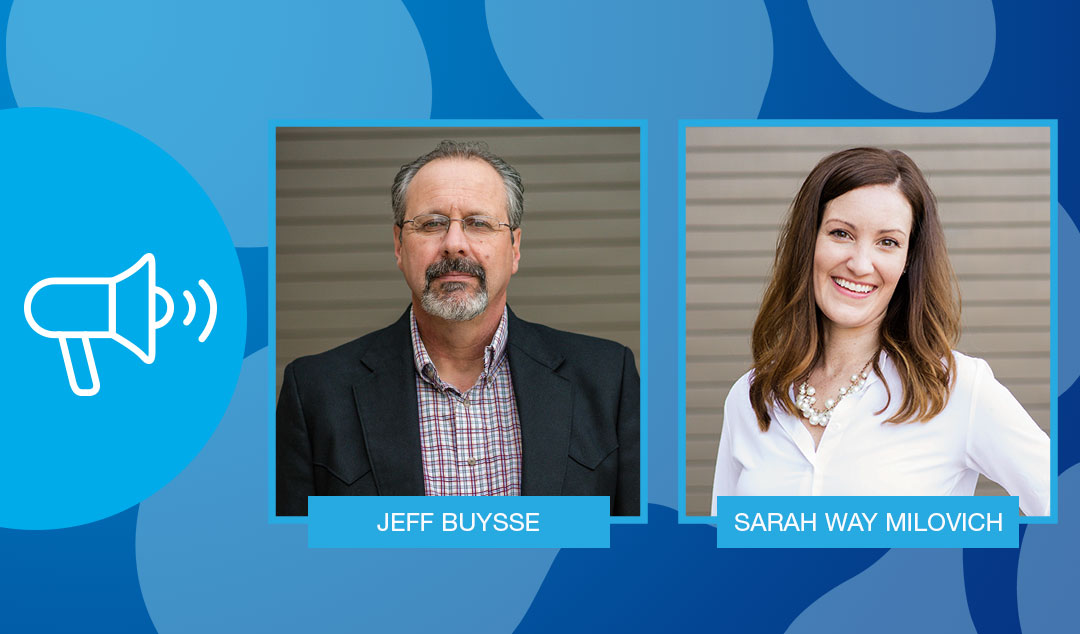
Carleton Promotes Sarah Way Milovich to General Counsel and VP of Compliance Following Jeff Buysse’s Retirement

FOR IMMEDIATE RELEASE                                                

For more information contact:
Carleton Sales Team
574.243.6040 option #3
sales@carletoninc.com

SOUTH BEND, IN, June 25, 2024 – Carleton, the industry leader in compliant financial calculations and lending document generation software, is pleased to announce the promotion of Sarah Way Milovich to General Counsel and Vice President of Compliance following Jeff Buysse’s retirement after nearly a forty-year career managing Carleton’s Compliance Services.

Jeff Buysse has been Carleton’s Vice President of Compliance Services advising lenders and regulators nationwide on the compliant implementation of federal and state lending regulations. He defined the calculation blueprint used within Carleton’s compliance software utilized by lending regulators across 13 different states. Jeff regularly served as an expert speaker at seminars and educational classes for state banking examiners and lending associations. Jeff has been integral in Carleton’s role of serving and guiding clients across all 50 states in their efforts to provide compliant loan calculations. Under Jeff’s leadership, Carleton’s Compliance Services have grown to include two attorneys, a compliance analyst, software developers, and client support personnel.

Following Jeff Buysse’s retirement, Sarah Way Milovich will take on the responsibilities as the Vice President of Compliance Services and General Counsel. Sarah joined Carleton in 2016 and has had the privilege of being mentored by Jeff Buysse. Sarah earned her Juris Doctorate from Loyola University School of Law in 2013 and graduated with a Bachelor of Arts in Political Science from the University of Notre Dame in 2009. Sarah has managed Carleton’s Compliance Services since 2022 and was recently recognized as one of American Financial Services Association’s “Influential Industry Leaders”. Similar to Jeff’s impact throughout the industry, Sarah continues to exhibit Carleton’s strong regulatory knowledge as demonstrated by her recent appearance at the National Association of Consumer Credit Administrators Regulators’ Training Symposium as an expert panel member exploring the nuances of “All-In APR” calculations.

“I am very privileged to have been part of Jeff Buysse’s team and trained by him. Jeff is arguably the most senior expert in the United States regarding consumer credit math and its compliant implementation within over 250 federal and state lending regulations nationwide. Jeff has ensured that his legacy includes leaving a compliance team well-equipped to uphold the high standards he established in supporting our clients and regulators. Jeff has been and will continue to be a valuable mentor to myself and our team,” commented Sarah.

“Jeff has undoubtedly made a profound impact at Carleton and throughout the consumer lending industry. His knowledge and expertise in navigating the complexities associated with regulatory compliance have established Jeff as a respected leader in the compliance community,” stated Matt Ruszkowski, President and COO, Carleton, Inc. “We are also very fortunate to have Sarah as part of the Carleton leadership team and the management of our Compliance Services Department. Her last eight years working side by side with Jeff Buysse has given her invaluable knowledge and experience that ensures we will continue to provide our clients with the support and high level of compliance services built into our solutions. Sarah’s promotion showcases Carleton’s dedication to strengthening our compliance team, reinforcing our commitment to building our clients’ trust and being the experts throughout the ever-evolving compliance landscape.”


About Carleton, Inc.:

Carleton is the country’s leading provider of financial calculation software, loan origination compliance support, and document generation software. With over 50 years of experience, our ongoing expertise and industry knowledge reaffirms why Carleton is a trusted partner. Founded in conjunction with the Truth In Lending Act, Carleton provides expert compliance support with continuous accuracy in all our calculations and disclosures at a state and federal level. To learn more about Carleton’s lending solutions, contact our sales team at sales@carletoninc.com or 574-243-6040 option #3.

April 2024 Compliance Updates

Effective State Changes

ARIZONA

Signed into law on April 8th, HB 2410 amends prohibitions surrounding vehicle manufacturer interactions with dealerships. Among other unlawful practices, manufacturers cannot withhold vehicles, parts, or incentives from specific dealerships, coerce dealers to install an electric vehicle charging station accessible to the general public, or use or threaten the exercise of the right of first refusal in bad faith upon the change of ownership of a dealership franchise. Effective ninety days after adjournment sine die.

IDAHO

Following trends seen throughout the country, HB 689 amends current laws regarding the relationship between vehicle manufacturers and vehicle dealers. Among other items, manufacturers are prohibited from demanding certain infrastructure on dealer lots, threatening to withhold the consent for a sales service agreement to a qualified buyer in order to release claims under a franchise agreement, and competing with franchised dealers in the sale, lease, or warranty services of new motor vehicles outside of fleet sales. Effective March 27, 2024.

IOWA

SF 2362 is a new law regarding service contracts in both the residential and motor vehicle spaces. The law prohibits the sale of service contracts in Iowa unless the service company files all service contract forms with the Commissioner and accepts the cancelation of a contract via phone, email, mail, or any other cost-effective manner. Effective July 1, 2024.

KANSAS

On March 29, 2024, Kansas Governor Laura Kelly signed House Bill 2247 into law changing provisions in the state’s Uniform Consumer Credit Code (“UCCC”) and the Kansas Mortgage Business Act (“KMBA”). There are nine amendments to the KMBA with many simply recodifying similar provisions from the UCCC. Among the various changes, the act requires mandatory disclosures for credit card surcharges, allows for extended repayment plans for consumers who borrowed from a payday lender, and clarifies language around “late fees” and their assessment. The Kansas UCCC covers loans and retail installment sales. HB 2247 changes the threshold amount covered by the UCCC from $25,000 to a “threshold amount” which is defined to align with the annual increase in the consumer price index (at least $69,500 as of July 1, 2024). In addition, the bill modifies the definition of “Annual Percentage Rate” and “Closed-End Credit” to tie these definitions explicitly to 15 USC § 1606 under the Truth in Lending Act. Changes to the law for Consumer Loans include: modifying the “threshold amount” based on the language above, altering the maximum finance charge for a consumer loan under a supervised lender from a blended rate to a flat 36% rate, increasing the allowed prepaid finance charge to an amount not to exceed the lesser of 2% or $300 (previously $100), and changing the maximum term to 25 months for loans of $1,000 or less (removing the 37 month restriction for other loans). Changes to Retail Installment Sales include: modifying the “threshold amount”, adding the definition of “installment”, increasing the allowed prepaid finance charge to an amount not to exceed the lesser of 2% or $300 (previously $100), and modifying the minimum charge to a flat $10 (previously based on a $75 threshold). Effective January 1, 2025.

SB 345 creates the Commercial Financing Disclosure Act requiring new disclosures of certain commercial financing transaction terms and authorizing the Attorney General of Kansas to enforce its provisions. Among items required to be disclosed are total funds provided and disbursed, total of payments, total dollar cost of financing, the manner, frequency and amount of each payment, and a statement regarding the prepayment of any financing. Effective July 1, 2024.

KENTUCKY

HB 8 is an appropriations bill signed into law on April 12, 2024. This bill removes the $60 ownership fee for hybrid vehicles that do not have plug-in charging capability in the state of Kentucky. Effective January 1, 2025.

On April 4, 2024, HB 15 was signed into law creating Kentucky’s Consumer Data Protection Act. Now consumers’ personal data and information is protected under this statute by distinguishing data controllers from data processors. Under this new law, Kentucky residents can request corrections to wrong data, require controllers to delete certain data, and obtain a copy of personal data given to a controller, among various other rights. Effective January 1, 2026.

MINNESOTA

The Minnesota Commerce Department published the periodic adjustment in dollar amounts effective July 1, 2024, through June 30, 2026. The adjustments are based on a 10% increase. The dollar amount adjustments include:

§47.59 Subd. 3 Principal Subject to 33% Interest $1,425.00
§47.59 Subd. 3 Minimum Refund $9.50
§47.59 Subd. 6 Default Charges $9.88
§47.59 Subd. 6 Loan Administration Fee Threshold $ 8,208.00

Effective July 1, 2024.

NEW JERSEY

On March 26, 2024, AB 4011 was signed into law amending the New Jersey Transportation Trust Fund Authority Act. Amongst other provisions and appropriations, the law would impose a $250 fee for any zero-emission vehicle registered in the state. That amount would increase every year on July 1st by $10 until 2028 resulting in a fee of $290. Effective July 1, 2024.

OKLAHOMA

The Department of Consumer Credit published the changes in dollar amounts which will become effective July 1, 2024. Included in the adjustments are the following:

Retail Installment Sales, §2-201:

The greater of:

30% of the amount financed up to $1,920; plus

21% of the excess to $6,400; plus

15% of the remainder to $66,400.

—OR—

21% Simple Interest

The dollar amounts under §3-508(A) remain the same. The allowable closing fee increases from $178.87 to $184.64.

For loans subject to §3-508B of the Oklahoma Code the maximum charge structure is:

Loan Amount Acquisition Charge Handling Charge
Up to $191.10 $6.37 per $31.86 of principal
$191.10-$223.02 1/10 of the amount of principal $19.12 per month
$223.03-$446.04 1/10 of the amount of principal $22.30 per month
$446.05-$637.20 1/10 of the amount of principal $25.49 per month
$637.21-$955.80 1/10 of the amount of principal $28.67 per month
$955.81-$1,274.40 1/10 of the amount of principal $31.86 per month
$1,274.41-$1,593.00 1/10 of the amount of principal $35.05 per month
$1,593.01-$1,911.60 1/10 of the amount of principal $38.23 per month
$1,911.61-$2,360.00 1/10 of the amount of principal $47.20 per month
$2,360.01-$2,950.00 1/10 of the amount of principal $59.00 per month
$2,950.01-$3,540.00 1/10 of the amount of principal $70.80 per month

The maximum delinquency charge for consumer credit sales and consumer loans will increase from $31.00 to $32.00. Effective July 1, 2024.

UTAH

HB 491 enacts the Government Data Privacy Act. This new law defines terms and imposes governmental duties related to personal data privacy, including data breach notifications, limits on data collection, and the ability to correct data. The law also establishes the Utah Privacy Governing Board and Office of Data Privacy in order to recommend changes to data privacy laws and implement those protections across governmental entities. Effective May 1, 2024.

Effective May 1, 2024, SB 98 changes the law around cybersecurity breaches and related notification requirements. Following a breach of computerized personal data, the data owner or licensee must notify affected Utah residents, the Attorney General’s office, and the Utah Cyber Center. Among items to be included in the notification are the date the breach occurred, when it was discovered, the number of people affected, the type of information breached, and the type of security that was breached in the compromise. Effective May 1, 2024.

VIRGINIA

On April 4, 2024, HB 330 was signed into law prohibiting the financing of a dog or cat, unless the financing conforms with state and federal consumer laws. Effective July 1, 2024.

HB 744 adds new consumer protections to Virginia law regarding the automatic renewal of service offers. The law requires a supplier of services to notify the consumer of an automatic renewal and provide the consumer an option to cancel the services no less than 30 days and no more than 60 days before the cancelation deadline or end of the contract term. Effective July 1, 2024.

HB 1106/SB 452 directs independent vehicle dealers to pass a DMV examination which costs $50 in order to renew a dealership license. Effective July 1, 2024.

HB 1419 allows online vehicle dealers to sell a vehicle electronically by obtaining a title in the dealer’s name for resale. Effective July 1, 2024.

SB 222 was signed into law on April 4, 2024, and relates to cybersecurity information accessible under the Virginia Freedom of Information Act and Government Data Collection and Dissemination Act while that data is in possession of the Virginia Information Technologies Agency (“VITA”). This law requires the data to remain confidential and not subject to those disclosure laws unless designated by the Virginia Commonwealth’s Chief Information Officer or their designee from VITA. Effective July 1, 2024.

WASHINGTON

On June 6, 2024, SB 6025 will go into effect. It prohibits certain acts by lenders which seek to evade current lending requirements by, for example, making loans that appear as personal property sales or leasebacks, disguising the loan proceeds as rebates, or charging a higher rate than currently allowed under the law. Effective June 6, 2024.

WISCONSIN

On April 4, 2024, SB 668 overhauled the Department of Financial Institutions’ (“DFI”) oversight of non-mortgage licensed financial service providers. While many changes were administrative in nature, including directing DFI to utilize the Nationwide Multistate Licensing System, the new law specifically focuses on amending provisions affecting licensed lenders, collection agencies, and sellers of checks. The Licensed Lenders Law applies to non-bank consumer loans of $25,000 or less with rates exceeding 18% per year and defines consumer loans and when the Law will apply to assignments and collections under its provisions. Additionally, the Law expressly authorizes a nonrefundable prepaid finance charge in connection with consumer loans and creates a sliding scale for such charges based on the loan amount. The Collection Agencies Law revises definitions and licensing requirements for debt collectors. Finally, the Seller of Checks Law was repealed and replaced by the Model Money Transmission Modernization Act which requires licensure with the DFI to engage in practices such as selling checks and transmitting money. Effective January 1, 2025.

Kansas Rate Adjustment for Consumer Loans & Retail Installment Sales

FOR IMMEDIATE RELEASE 

For more information contact:

Carleton Sales Team

574.243.6040 option #3

sales@carletoninc.com

On March 29, 2024, Kansas Governor Laura Kelly signed House Bill 2247 into law changing provisions in the state’s Uniform Consumer Credit Code (“UCCC”) and the Kansas Mortgage Business Act (“KMBA”). There are nine amendments to the KMBA with many simply recodifying similar provisions from the UCCC. Among the various changes, the act modernizes language (such as adding the allowance for electronic signatures), removes references to precomputed transactions, amends licensing requirements, updates record keeping requirements, requires mandatory disclosures for credit card surcharges, allows for extended repayment plans for consumers who borrowed from a payday lender, and clarifies language around “late fees” and their assessment.

The KS UCCC covers loans and retail installment sales. HB 2247 changes the threshold amount covered by the UCCC from $25,000 to a “threshold amount” which is defined to align with the annual increase in the consumer price index (at least $69,500 as of July 1, 2024). In addition, the bill modifies the definition of “Annual percentage rate” and “Closed-End Credit” to tie these definitions explicitly to 15 USC § 1606 under the Truth in Lending Act.

Impact on Consumer Loans:

  • Modifies the “threshold amount” based on the language above.
  • Alters the maximum finance charge for a consumer loan under a supervised lender from a blended rate to a flat 36% rate.
  • Increases the allowed prepaid finance charge to an amount not to exceed the lesser of 2% or $300 (previously $100).
  • Changes the maximum term to 25 months for loans of $1,000 or less (removing the 37 month restriction for other loans).

Impact on Retail Installment Sales:

  • Modifies the “threshold amount” based on the language above.
  • Adds definition of “installment.”
  • Increases the allowed prepaid finance charge to an amount not to exceed the lesser of 2% or $300 (previously $100).
  • Modifies the minimum charge to a flat $10 (previously based on a $75 threshold).

Effective January 1, 2025.


About Carleton, Inc.:

Carleton is the country’s leading provider of financial calculation software, loan origination compliance support, and document generation software. With over 50 years of experience, our ongoing expertise and industry knowledge reaffirms why we are a trusted partner.  Founded in conjunction with the Truth In Lending Act, Carleton provides expert compliance support with continuous accuracy in all our calculations and disclosures at a state and federal level. To learn more about Carleton’s lending solutions, contact our sales team at sales@carletoninc.com or 574-243-6040 option #3.

Carleton Featured in the Special Finance 175 by Subprime Auto Finance News

Each year, Cherokee Media Group orchestrates the Special Finance 175 by Subprime Auto Finance News which recognizes the finance companies, service and technology providers, and other organizations that continue to thrive in the auto finance industry.

The Carleton team was recently honored to receive this recognition again in 2024 as “one of the most influential companies serving the subprime auto finance industry.”

Nick Zulovich, senior editor at Cherokee Media Group, explains further in the magazine’s April issue saying, “In summary, this feature is meant to reiterate the ‘good work’ that’s being completed […].” Nick continued, “To the companies included, let this issue be a salute to each of you, your management teams, your representatives in the field and your support systems that go well beyond brick-and-mortar buildings and communications infrastructure.”

“We are privileged to be named on this year’s Special Finance 175 list and grateful for the recognition highlighting our team’s commitment to being our customer’s trusted partner,” says Matt Ruszkowski, Carleton President and COO.  Matt added, “Carleton’s commitment to providing accurate and compliant financial solutions with expert-level service allows our customers to focus on what they do best, so they can be successful.”


View April Issue of Subprime Auto Finance News


About Carleton, Inc.:

Carleton is the country’s leading provider of financial calculation software, loan origination compliance support, and document generation software. With over 55 years of experience, our ongoing expertise and industry knowledge reaffirms why Carleton is a trusted partner. Founded in conjunction with the Truth In Lending Act, Carleton provides expert compliance support with continuous accuracy in all our calculations and disclosures at a state and federal level. To learn more about Carleton’s lending solutions, contact our sales team at sales@carletoninc.com or 574-243-6040 option #3.

March 2024 Compliance Updates

Effective State Changes

INDIANA

SB 220 updates references to federal law made in the Indiana Uniform Consumer Credit Code, the First Lien Mortgage Lending Act, and the Indiana Code title governing financial institutions. Effective July 1, 2024.
On March 13, 2024, SB 222 was signed into law by Governor Eric Holcomb. This bill has many provisions aimed at vehicle dealers, such as requiring any item that is not a part of the advertised sale price of a vehicle to be a separate line item in the contract, obligating the consumer of a rebuilt or salvage vehicle to sign a written acknowledgement of its status, and directing dealers to submit records electronically within ten days of a request related to an investigation or audit by the Indiana Secretary of State. Effective July 1, 2024, in part and on July 1, 2025, in part.

NEW HAMPSHIRE

The Expectation of Privacy Act or SB 255 was signed into law on March 6, 2024. This law establishes requirements for data processors in control of private data or personal information of consumers by establishing rights and responsibilities of “consumers” and “controllers” of said data. Effective January 1, 2025.

SOUTH DAKOTA

HB 1063 will require county treasurers to collect evidence that a motor vehicle sales or other tax was paid to another state when an applicant applies to register their motor vehicle in the state. If no evidence exists, the applicant will be required to pay tax on the vehicle by using a national motor vehicle valuation service to establish the price of the vehicle when the applicant first brought it into South Dakota. Effective July 1, 2024.
SB 112 will now allow any owner without a South Dakota license or identification card to title a motor vehicle, off-road vehicle, snowmobile, or boat in South Dakota by paying a $100 fee in addition to the title application fee. Effective July 1, 2024.

TEXAS

Released in February 2024, the dollar amount brackets and ceilings subject to adjustment in the Texas Finance Code will increase as follows:

Consumer Loans – §342.201

(Add-On Rates)

$18 per $100 per annum of the cash advance to $2,640 plus,

$8 per $100 per annum of the excess to $22,000

OR

(Simple Melded Rates)

30% per annum of the cash advance to $4,400 plus,

24% of the excess to $9,240 plus,

18% of the remainder to $22,000

Alternate Consumer Loans Subchapter F – §342.251

Loan Amount Acquisition Charge plus Installment Acct Handling Charge
Under $30 $1 for each $5 cash advanced
From $30 up to $35 10% cash advance plus $3 per month
From $35.01 up to $70 10% cash advance plus $3.50 per month
From $70.01 up to $100 10% cash advance plus $4 per month
From $100.01 up to $880 $10 plus $4 per month for each $100 of the cash advance
From $880.01 up to $1,760 $10 plus $4 per month for each $100 of the cash advance

Retail Installment Sales (“Other Goods”) – §345.055

(Add-On Rates)

$12 per $100 per annum of the principal balance to $4,400 plus,

$10 per $100 per annum of the excess to $8,800 plus,

$8 per $100 per annum of the remainder.

Effective July 1, 2024.

UTAH

HB 174 was adopted into law on March 13, 2024. The law requires a person who provides a product or service under a contract with an automatic renewal provision to provide notice at least 30 but not more than 60 days before the renewal date. The notice must contain certain disclosures regarding the renewal and cancelation of said contract. Utah’s Division of Consumer Protection is authorized to enforce this law with fines and penalties if any provisions are violated. Effective May 5, 2024, in part, and January 1, 2025, in part.

SB 25 requires a consumer lender to register with the Nationwide Multistate Licensing System and Registry and submit proof of registration to Utah’s commissioner of financial institutions. Effective May 1, 2024.

WEST VIRGINIA

Following trends seen throughout the country in 2023, West Virginia SB 173 was signed into law on March 13, 2024, and amends the laws governing motor vehicle dealers, distributors, manufacturers, and affiliated entities. The law clarifies terms and responsibilities around warranty and recall work and reimbursement, prohibits manufacturers from using incentive programs to amend dealer agreements, and prohibits manufacturers from altering dealer franchise agreements in case of a dealership sale, amongst other provisions. Effective June 5, 2024.

Effective Federal Changes

CONSUMER FINANCIAL PROTECTION BUREAU

On March 5, 2024, the Consumer Financial Protection Bureau (“CFPB”) released a final rule amending Regulation Z, which implements the Truth in Lending Act, to decrease the late fee “safe harbor” amount for larger card issuers from $30 to $8. According to the CFPB’s notice, the final rule takes effect 60 days after its publication in the Federal Register. However, two days after the rule was issued, the Chamber of Commerce of the United States of America, Fort Worth Chamber of Commerce, Longview Chamber of Commerce, American Bankers Association, Consumer Bankers Association, and Texas Association of Business filed a lawsuit in the Fifth Circuit to invalidate the rule and requested a preliminary injunction from its application throughout trial. Effective May 5, 2024, absent any court-imposed postponement.

February 2024 Compliance Updates

Effective State Changes

MICHIGAN

Bulletin 2024-05-CF stated that the loan processing fee amount will remain at $400 from January 1, 2024, through December 31, 2025. Effective January 1, 2024.

SB 533 amends the Michigan Code to allow the Secretary of State to issue an electronic vehicle title and establish an electronic system to facilitate transfers of vehicle ownership between private individuals instead of through the collection of paper documents. Effective February 13, 2024.

MISSOURI

The document preparation fee in the state of Missouri was increased through emergency rulemaking from $565.38 to be $587.43 for 2024. Effective February 23, 2024.

NEW JERSEY

AB 4723 will now require vehicle dealers who accept used vehicles in for trade or from lease to offer to delete the consumer’s personal information from the vehicle’s computer systems. The dealer may charge a fee for this service which must be disclosed to the consumer and relay to the consumer that they may try to delete this information themselves. Effective January 16, 2024.

Once effective, SB 4084 will require new procedures for the issuing of temporary license plates and registration certificates in New Jersey. Vehicle dealers will now need to maintain a physical or electronic record of all temporary license plates issued for three years. Effective August 1, 2024.

OHIO

Governor Mike DeWine enacted HB 201 on December 28, 2023. This new law prohibits the Ohio Environmental Protection Agency from adopting any vehicle emissions stricter than the Clean Air Act. In addition, it restrains any state agency, township, or other locality from restricting the sale of a vehicle based solely on the energy source used for power. Effective March 28, 2024.

SOUTH CAROLINA

The Department of Consumer Affairs released its biannual dollar bracket adjustment effective from July 1, 2024, through June 30, 2026. Among the dollar bracket adjustments are:

  • The maximum amount for consumer credit sales, consumer leases, and consumer loans increases from $115,000 to $127,500. (§2.104(1)(e), §2.106(1)(b), and §3.104(d), respectively).
  • The maximum delinquency charge for sales and loan transactions increases from $23.00 to $25.50. (§2.203(1) and §3.203(1), respectively).
  • The minimum delinquency charge for sales and loan transactions increases from $9.20 to $10.20. (§ 2.203(2) and §3.203(2), respectively).

Effective July 1, 2024.

TEXAS

On June 11, 2023, HB 2746 amended the Texas Finance Code regarding refunds for the termination of a debt cancelation agreement upon prepayment of a retail installment sale. In response, the Finance Commission of Texas released Regulation 286331r governing motor vehicle retail installment contracts. This regulation updates recordkeeping requirements for retail sellers who assign these retail installment contracts in Texas. Additionally, the regulation clarifies that retail sellers and third-party administrators are responsible for providing refunds upon termination of a debt cancellation agreement, holders must either issue a refund or provide written notice to the retail seller and administrator to issue a refund, and administrators and retail sellers are responsible for maintaining records of all refunds. Effective January 4, 2024.

WISCONSIN

On November 16, 2023, SB 259 was signed into law by Governor Evers. The bill exempts from payday loan regulation any transaction with no finance charges—as defined by the Truth in Lending Act Regulation Z—or other charges or fees. Effective immediately.

Effective Federal Changes

FEDERAL TRADE COMMISSION

The Federal Trade Commission issued the Combating Auto Retail Scams Trade Regulation Final Rule (“CARS Rule”) on December 12, 2023, with an effective date of July 30, 2024. The CARS Rule is an attempt by FTC to enhance consumer protections by combatting dealer bait-and-switch tactics and hidden “junk fees”.

The CARS Rule:

  • Prohibits dealers from making certain misrepresentations in the course of selling, leasing, or arranging financing for motor vehicles;
  • Requires accurate pricing disclosures in dealers’ advertising and sales communications;
  • Requires dealers to obtain consumers’ express, informed consent for charges;
  • Prohibits the sale of any add-on product or service that confers no benefit to the consumer; and
  • Requires dealers to keep records of certain advertisements and customer transactions.

Effective July 30, 2024, however, the CARS Rule is currently on hold due to pending litigation.

Leap Year 2024: How Does It Impact a Loan Calculator?

In what seems like the blink of an eye, four years have passed and another Leap Year is upon us. One extra day to make up for the fact that it actually takes a little longer than 365 days for the Earth to orbit the Sun. In honor of both Groundhog’s Day and the mysterious Leap Day, we thought it would be worthwhile to recycle one of our “oldie but goodie” articles on the complications Leap Day poses on consumer loan calculations.

While most people consider February 29th to be a “free” day we get every four years, compliance officials and loan calculation software providers know that it can actually be more troublesome than most people would even realize. In the consumer lending industry, the various effects of Leap Day on loan origination, loan servicing systems, and the compliant implementation of proper loan software parameters are quietly downplayed. That shouldn’t be the case! As we at Carleton have stated before: simple interest quickly becomes quite complicated. For starters, during a Leap Year:

Top 3 Questions For The Consumer Lending Industry to Consider During a Leap Year

Question #1: Does interest accrue on the balance at 1/366 of the annual interest rate? Or 1/365?

Is it ‘fair’ for the creditor to get a lesser charge all year long when Leap Day only occurs in February? An illustration: a consumer loan or retail installment sales contract originated in December of a Leap Year involving simple interest at 1/366 daily rate will always receive less charge for that month than any identical transaction originated the following three years on the exact same date and time. That does not seem fair or just.

Question #2: Does a finance company or lender’s servicing system collect the actual interest agreed to by contract?

If a 1/365 annual interest rate is used to calculate daily charge, does the creditor intend to collect interest on February 29th or not? If the consumer lending organization does charge interest on Leap Day, does that align with their contractual disclosures? Frankly, these are questions that may even be too advanced—do all servicing systems even have the capability of accounting for Leap Day?

Question #3: If a payment is received and posted on Leap Day, is it recognized as 2/29/24?

For banks and institutions that ignore Leap Year altogether and have coded their loan origination and loan servicing software systems to do the same, what actually happens when a payment occurs on Leap Day? Seems like it would make posting a payment on February 29th very problematic. This may seem extreme, but should that bank even be OPEN on February 29th?


While this may seem like it’s all simply an academic exercise, for many lenders, Leap Year does indeed impact the nuts and bolts of calculating principal and interest. It is also critical that Leap Year is properly accounted for between front- and back-end systems to ensure compliance with state and federal regulations. Contact us today for an evaluation and learn how Carleton can handle your loan calculation needs.

GDS Link Announces Partnership with Carleton, Inc.

FOR IMMEDIATE RELEASE                                                

For more information contact:
Carleton Sales Team
574.243.6040 option #3
sales@carletoninc.com


DALLAS, TX, January 26, 2024—GDS Link, a global leader in credit risk decisioning solutions, today announced a strategic partnership with Carleton by integrating Carleton’s compliant financial calculations, CarletonCalcs®, and lending document generation software, CarletonDocs®, within GDS Link’s Credit Risk Decisioning solutions.

CarletonCalcs®, a suite of configurable payment calculation and compliance APIs, is designed to integrate seamlessly with lending and leasing applications, supporting product calculation requirements while adhering to compliance at lender, state, and federal levels. CarletonDocs® further enhances this integration by offering streamlined document processing, ensuring rapid and compliant document generation and delivery. This partnership significantly bolsters GDS Link’s capabilities in data aggregation and responsive decisioning, providing lenders with a robust solution in credit risk management.

The partnership between GDS Link and Carleton unites Carleton’s specialized APIs — OriginationPlus, Compliance, and Student Lending — with GDS Link’s Credit Risk Decisioning solutions. This partnership creates a robust, comprehensive lending platform. It enables precise, compliant payment calculations and enhances customer engagement through efficient loan origination processes. Incorporating advanced models, third-party data, and electronic documentation, this integrated solution streamlines underwriting and bolsters fraud prevention, delivering a seamless and responsive lending experience.

Click Here To Read Full Press Release